Every year, workers are injured—or worse—because machinery energizes unexpectedly during maintenance. The fix isn’t complicated: a real lockout tagout safety talk that sticks. Yet too many safety meetings treat LOTO as a box to check, not a life-preserving ritual. When a conveyor powers on while someone’s clearing a jam, or a press drops because a valve wasn’t isolated, it’s not just a failure of procedure—it’s a failure of communication. That’s where an effective lockout tagout safety talk changes everything.
A safety talk isn’t a quick announcement before shift start. It’s a focused, targeted discussion that reinforces why LOTO matters, how it’s done right, and what happens when corners are cut. Done well, it aligns teams, surfaces risks, and builds a culture where safety isn’t enforced—it’s expected.
What Is a Lockout Tagout Safety Talk?
A lockout tagout safety talk is a short, structured discussion focused on the principles, procedures, and real-world application of energy control during maintenance or servicing. It’s more than a reminder—it’s a reinforcement tool. These talks typically last 5 to 15 minutes and are delivered in team huddles, pre-shift meetings, or before high-risk tasks.
Unlike formal training, safety talks are conversational. They target specific scenarios: changing a motor, cleaning a saw blade, or replacing a pump. The goal isn’t to teach LOTO from scratch but to keep it top of mind and highlight nuances workers might overlook.
For example: A maintenance crew preps to replace a hydraulic hose. The supervisor holds a safety talk reminding the team to isolate not just the main pump, but also accumulator pressure. That’s the difference between a routine repair and a high-pressure fluid injection injury.
The Core Elements of an Effective LOTO Safety Talk
To be effective, a safety talk must go beyond “remember to lock it out.” It needs clarity, relevance, and engagement. Here are the essential components:
1. Clear Purpose Start with the “why.” Connect the talk to a real hazard. Example: “Today we’re talking about LOTO for the packaging line because last week, someone bypassed the guard interlock during cleaning. That’s a near-miss that could’ve ended differently.”
2. Task-Specific Focus Generic talks get ignored. Tailor each session to the equipment and energy sources involved. Example: For a boiler inspection, discuss steam traps, electrical feeds, and residual heat—not just “lockout the machine.”
3. Step-by-Step Review Walk through the actual LOTO procedure as it applies to the task. Include: - Energy sources (electrical, hydraulic, pneumatic, thermal, chemical) - Lockout points - Verification steps (trying to start the machine after isolation) - Group lockout protocols if multiple people are involved
4. Common Mistakes and How to Avoid Them Highlight real-world errors. These are what people remember. Examples: - Forgetting stored energy (e.g., springs, capacitors) - Using someone else’s lock - Removing a tag without verifying the work is done - Not testing the machine after lockout
5. Team Involvement Ask questions. Get workers to describe the steps. Have someone explain where the lockout points are on a specific machine. Engagement increases retention.
When to Conduct a LOTO Safety Talk
Timing determines impact. These are the non-negotiable moments for a safety talk:
- Before any maintenance or servicing involving energy sources
- After an incident or near-miss related to uncontrolled energy
- When new equipment is introduced
- Following a procedural change
- During onboarding or refresher training
- After shift changes when multiple crews are involved
A plant in Ohio reduced LOTO violations by 68% in six months simply by mandating a safety talk before every maintenance task—no exceptions. The consistency sent a clear message: this matters.
Real-World Scenarios: How LOTO Safety Talks Prevent Disasters
Scenario 1: Conveyor Belt Jam A worker reaches into a jammed conveyor without locking it out. The machine restarts automatically, pulling their arm in. Safety Talk Focus: Emphasize that automated start sequences don’t eliminate the need for lockout. Review the lock points and verify zero energy.
Scenario 2: Changing a Saw Blade Maintenance removes a blade, but someone at a remote station powers up the saw to “test it.” Safety Talk Focus: Reinforce that all energy sources must be isolated—even if the task seems fast. Use group lockout with a primary lock carrier.
Scenario 3: Cleaning a Mixer An operator climbs into a mixer without locking out the hydraulic agitator. The system cycles, causing crushing injuries. Safety Talk Focus: Stored hydraulic pressure must be bled. Verify by attempting to operate the agitator after lockout.
These aren’t hypotheticals. They’re OSHA case files. A 5-minute safety talk could have prevented each.
Common Pitfalls in LOTO Safety Talks (And How to Avoid Them)
Even well-meaning talks fail when they fall into these traps:
1. Too Generic “Always lock it out” doesn’t help. Workers need to know how and where. Fix: Use machine-specific diagrams or conduct the talk at the equipment.
2. One-Way Monologue If only the supervisor talks, attention fades. Fix: Ask open-ended questions: “What energy sources does this machine have?” or “Where would you place your lock?”
3. No Follow-Up A talk without reinforcement has short shelf life. Fix: Do random LOTO audits. Praise correct behavior. Address gaps immediately.
4. Ignoring Stored Energy Electrical is obvious. But what about gravity, springs, or pressurized lines? Fix: Build a checklist for each machine that includes all energy types.
5. Skipping Verification Locking out isn’t enough. Workers must test the machine to confirm it can’t start. Fix: Make “verify isolation” a verbal step in every talk.
Integrating LOTO Safety Talks into Your Safety Culture
A single talk won’t transform a site. But consistent, high-quality discussions build habits.
Make It Routine Schedule safety talks like toolboxes—short, frequent, and mandatory. Use a log to track topics and attendees.
Train Supervisors to Lead, Not Lecture Supervisors should facilitate, not dictate. Role-play scenarios. Encourage team input.
Use Visual Aids Post LOTO procedure maps near machines. Use photos of correct lock placement or common mistakes.
Link to Your Energy Control Program Safety talks should reflect your written LOTO program. If the procedure says “verify zero energy,” the talk should reinforce that step.

One manufacturing site uses a rotating “LOTO champion” each week—someone who leads the safety talk and audits compliance. It’s boosted ownership and reduced violations.
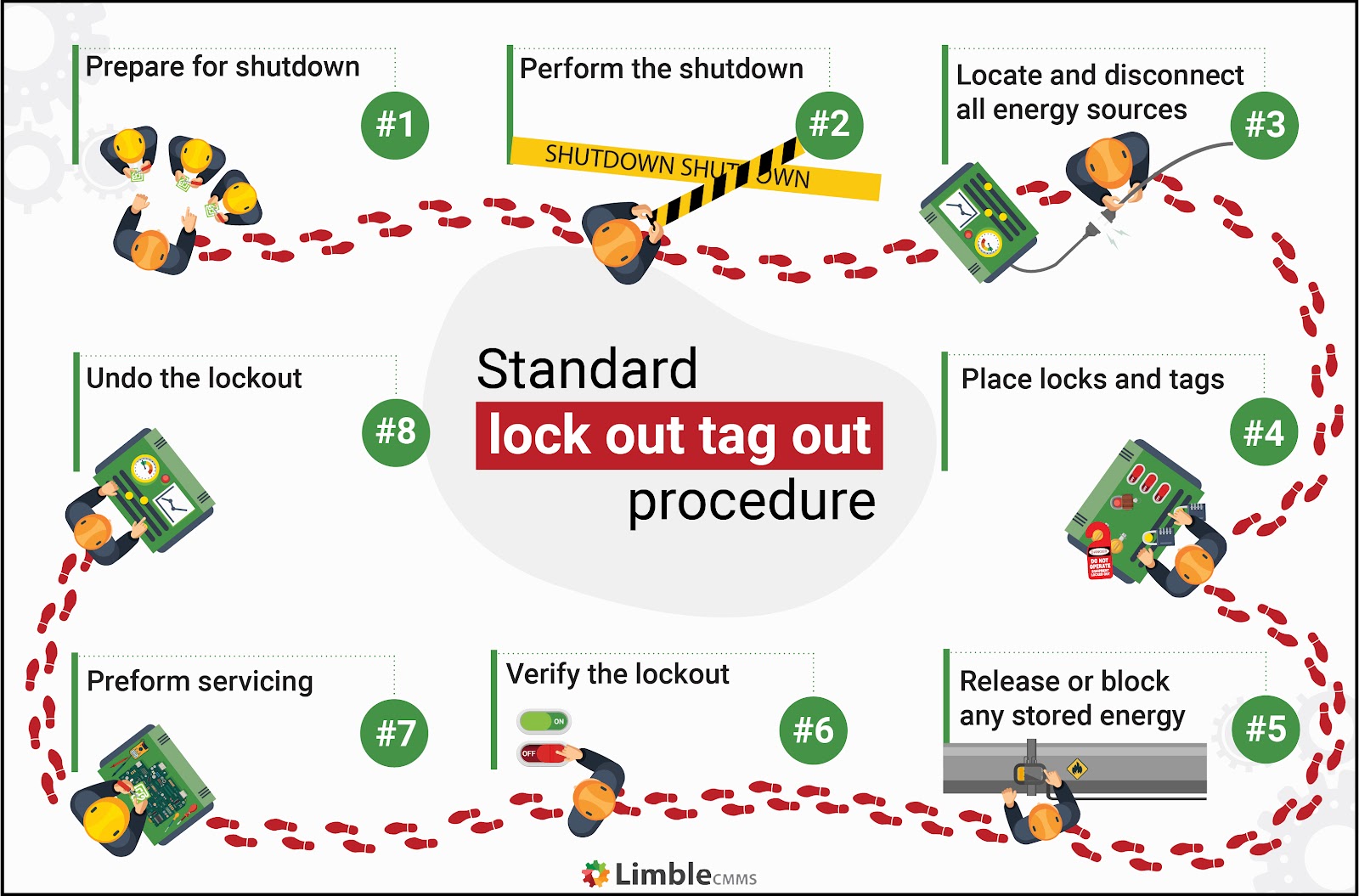
Critical Components of a LOTO Procedure (Reference for Talks)
Every safety talk should align with these core steps:
- Prepare for Shutdown
- Identify all energy sources and required lockout devices.
- Notify Affected Personnel
- Inform operators and nearby workers that maintenance is starting.
- Shut Down the Equipment
- Use normal stopping procedures.
- Isolate Energy Sources
- Close valves, open disconnects, block moving parts.
- Apply Locks and Tags
- Each worker applies their own lock. Tags explain why and who locked it.
- Release Stored Energy
- Bleed lines, block raised loads, discharge capacitors.
- Verify Isolation
- Attempt to start the machine (safely) to confirm it can’t operate.
- Perform Maintenance
- Remove Locks and Restore Service
- Only the person who applied the lock removes it. Notify all personnel before restart.
A safety talk shouldn’t recite all nine steps every time—but it should spotlight the ones most likely to be missed.
Build Better LOTO Safety Talks: Action Plan
Start stronger tomorrow with these steps:
- Review Past Incidents
- Use real near-misses or violations as talk topics.
- Develop a 30-Day Talk Calendar
- Plan weekly discussions by equipment, task, or risk level.
- Train Leaders with Scripts and Prompts
- Give supervisors talking points, but encourage adaptation.
- Conduct Spot Audits
- Observe a talk, then provide feedback.
- Encourage Peer Accountability
- Empower workers to stop work if LOTO isn’t followed.
- Rotate Responsibility
- Have experienced techs lead talks—they often connect better.
A safety talk that’s relevant, interactive, and tied to real work doesn’t feel like compliance. It feels like protection.
Final Word: Safety Talks Save Lives—If They’re Done Right
A lockout tagout safety talk isn’t another item on the safety checklist. It’s a frontline defense against catastrophic injury. When done with purpose—rooted in real tasks, real risks, and real people—it shifts culture. It turns LOTO from a procedure into a practice.
Don’t settle for “we had a talk.” Make sure it mattered. Keep it specific. Keep it honest. And never assume anyone knows the steps unless you’ve confirmed it together.
Start your next shift with a safety talk that’s not just safe—but significant.
FAQ
What is the purpose of a lockout tagout safety talk? It reinforces LOTO procedures, addresses task-specific hazards, and promotes awareness to prevent injuries from unexpected energization.
How often should LOTO safety talks be held? Before any maintenance, after incidents, when procedures change, or at regular intervals—ideally weekly or per shift for high-risk areas.
Who should lead a LOTO safety talk? Supervisors, safety officers, or trained team leads—but experienced workers can also facilitate to boost engagement.
Can a safety talk replace formal LOTO training? No. Safety talks supplement initial and annual training by reinforcing key points and adapting to current tasks.
What should be documented after a safety talk? Attendee names, topic, date, and any action items. This shows due diligence and helps track recurring issues.
How long should a LOTO safety talk last? 5 to 15 minutes—focused, relevant, and interactive enough to maintain attention.
What makes a LOTO safety talk effective? Specificity, worker involvement, real-world examples, and alignment with actual procedures and equipment.
FAQ
What should you look for in Lockout Tagout Safety Talk: Protect Workers Every Time? Focus on relevance, practical value, and how well the solution matches real user intent.
Is Lockout Tagout Safety Talk: Protect Workers Every Time suitable for beginners? That depends on the workflow, but a clear step-by-step approach usually makes it easier to start.
How do you compare options around Lockout Tagout Safety Talk: Protect Workers Every Time? Compare features, trust signals, limitations, pricing, and ease of implementation.
What mistakes should you avoid? Avoid generic choices, weak validation, and decisions based only on marketing claims.
What is the next best step? Shortlist the most relevant options, validate them quickly, and refine from real-world results.